The Progressive Era

Lessons, Tips, and Resources for the Progressive Era in United States History Since 1877.

Some teachers teach American Expansion before addressing the Progressive Era. Personally, I’ve found it easier for students to understand why the Progressive Era occurred when its taught directly after the Industrial and Gilded Ages, but do what’s best for you and your students. I spend about 7 days on this unit plus a test day. I agree that’s not a lot of time, it’s just the time that’s allotted within the district I work for. I would prefer to spend around 11 days on this unit. So if you have more time, definitely use it.

I introduce the Progressive Era unit by using a Galler Walk/PowerPoint. If you’re interested in a premade one from my store, you can purchase it by Clicking Here. Sometimes I use it as a Gallery Walk and other times as a PowerPoint. I do print it off and give a copy to my students for reference. I stopped asking my students to take notes because they always struggled with what to write and often wrote random things. By printing the PowerPoint (6 slides to a page), students have all the information they need at their fingertips and can use it to reference for help on assignments later in the unit.

One of the most important things to do when introducing the Progressive Era is to explain that this time period occurred because people wanted to right the wrongs of industrial society. They wanted to fix problems in housing, industry, politics, and more. Theodore Roosevelt is going to be confusing because here he is a President and in the next unit, he hasn’t become President yet. So you also want to explain to students that the American Expansion Unit and the Progressive Unit occur in the same time period but that it makes more sense to teach the Progressive Era first due to its connection to the Industrial and Gilded Ages (that is if you teach it before American Expansion).

I start this unit by talking about the farmers and the Grange Movement. In particular, their concern about the government addressing the issue of railroads and their support for the Populist (People’s) Party. Remember to explain that the Interstate Commerce Act was passed because of the influence of the Grangers. The Populist Party plays a significant role in the Progressive Era and resulted in several new amendments. Run of the Populist Party’s Platform with the students and explain which pieces were adopted. The Amendments influenced by this group include the 16th and 17th Amendments.

Other Progressive Era Amendments include the 18th and 19th. The 19th Amendment and the granting of Women’s Suffrage in 1920 is generally considered the last Progressive Era achievement.

Protection for workers would be a major issue during this era. They were concerned about their working conditions and pay. The Populists and others would use this to try to draw more voters like William Jennings Bryan during the 1896 Presidential Election.

Progressives realized how much power businesses had over the government and that many of the government’s actions favored business over the people. They sought to reduce the influence of big business and end corruption in politics.

During this period we also saw the rise in the Social Gospel Movement. Settlement Houses sprang up all over the nation, slowly replacing the power of the Political Machines of the Industrial and Gilded Ages. Jane Adams and Hull House are must-knows for this topic.

The Temperance Movement, which sought to ban alcohol, continued to grow in this period. Eventually, Temperance workers would be successful in the passing of the 18th Amendment which banned the sale of alcohol and started Prohibition. The 18th Amendment would be the only one to be repealed by the 21st Amendment, making alcohol legal again.

Women’s Suffrage continued to make strides during the Progressive Era. Susan B. Anthony and Elizabeth Cady Stanton remained active in this movement. They would be successful in gaining the right to vote in 1920 with the 19th Amendment (although neither of them lived to see it). It is important to note that Native Americans would not gain the right to vote until 1924 without having to give up their tribal traditions under the Indian Citizenship Act.

Muckrakers were the writers and journalists who sought to expose corruption and abuses of big business and the government. They were called Muckrakers because they would rake through the muck to expose the abuses. Key Muckrakers were Jacob Riis, Ida Tarbell, and Upton Sinclair. The Jungle by Sinclair is probably the most notable Muckraker work next to Riis’s How the Other Half Lives.

It is important to show students the connection between The Jungle and the passing of the Pure Food and Drug Act and the Meat Inspection Act. Both sought to protect consumers from products that could cause them harm and death. Both women’s organizations and Muckrakers were responsible for seeing these two pieces of legislation passed. I explain to students that before the Pure Food and Drug Act, companies could literally sell water and claim it was a cureall as there was no government regulation. Companies could also sell harmful products with no repercussion before the legislation was passed. An interesting way to connect this law to today is the Red Bull lawsuit. The FDA says that companies can only make claims that they can prove with their products. Red Bull used to have a slogan that said it gave its customers “wings.” They were sued and lost because they did not give the plaintiff “wings.” Red Bull’s new slogan is “Red Bull gives you wiings,” because wiings do not actually exist.

The movement to protect African American rights continued during this period. Booker T. Washington and W.E.B. Du Boys may have not agreed on how African Americans should achieve equality, but they both agreed that they should have it. Fun fact about DuBois is he was the first African American to receive a Ph.D. from Harvard. I used to get these two mixed up in their beliefs. Booker T. Washington supported education first and gradual equality, I remember that he has “book” in his name and he pushed for great educational opportunities for African Americans. Ida B. Wells also played a role in this time period, advocating against lynching and in support of civil rights for African Americans.

Now that African Americans had the right to vote with the 15th Amendment, there were attempts to suppress those rights. The Grandfather Clause protected poor whites from literacy tests and poll taxes. However, African Americans who could not afford to pay a poll tax or pass a literacy test (that was made for them to fail) prevented them from voting. Segregation also continued to grow during the period, it was challenged in Plessy v. Ferguson but the Supreme Court Said that “separate but equal” was constitutional, fueling segregated facilities all across the south.

Preservation of the nation’s natural resources also became an issue during this period. John Muir played a major role and influenced Theodore Roosevelt to create the National Parks. Since the creation of the National Parks, our nation’s resources have been preserved for future generations. This includes places like the Grand Canyon and Yellowstone.

More power entered the hands of voters with initiative, recall, and referendums. People now played a greater role in the political process.

The Pendleton act created the civil service exam, ending the Spoils System. This helped to reduce corruption in government and ensured that people in government positions were actually qualified to perform those positions.

Third parties like the Populists saw a rise in participation in this era. They sought to provide a voice to minority groups like the farmers and others. These political parties helped to increase participation in politics for those who might feel marginalized by the larger political parties. They would influence elections and the passing of laws and amendments. The most notable was the Election of 1912 when the Republican vote was split between Theodore Roosevelt and William Howard Taft, resulting in the election of Woodrow Wilson the Democratic candidate.

The Federal Reserve was created in 1913 to regulate the nation’s monetary policy from interest rates to selling government bonds.

Theodore Roosevelt earned the name Trustbuster for shutting down harmful trusts. Although ones he deemed to be good for the economy, he left them open. William Howard Taft actually shut down more trusts, but T. Roosevelt is known as the Trustbuster and the use of the Sherman Anti-Trust Act.

Progressive also sought to end child labor and they were successful in Congress passing legislation to restrict child labor. However, the Supreme Court declared it unconstitutional. Child labor would not be abolished until 1941.

For assignments after we get past the introduction, I do a wide variety of student-centered assignments.

This is a great unit to work with Political Cartoons. I do not have these available yet in my store, so check back for updates or join my email list for when they’re uploaded. I have two assignments for political cartoon analysis. One is the SLIDE method where students identify symbols, labels, infer, describe, and what era it is from. The other is a card sort where they match the political cartoons to the topic like the 19th Amendment or the Interstate Commerce Act. Both are great activities.

I know pretty much everyone gives an excerpt over The Jungle for students to read and analyze. You can easily find excerpts and the full book online. Stay tuned if you’re interested in worksheets for this topic.

Of course, I do my tried and true picture cards. I make a grouping of pictures and clues related to vocabulary terms and I give students a worksheet with a word bank. They then use the visual clues to determine which vocabulary term the set of pictures represents. This activity by far has been the best one I’ve ever developed from scratch, helping all levels of students including ELL/ESL and Sped. The first time I did this the students weren’t big fans, but after that, they are excited to see the picture cards on their desks when they come in now. If you’re interested in a pre-made set for the Progressive Era, CLICK HERE to purchase. You can of course make your own.

I also do a Fact or Fiction Activity. For this I cut red and green card stock into cards, you can purchase colored index cards that have red and green. I give each student a pair of each. I then put a PowerPoint up on the screen with a statement. I read the statement aloud and I ask the students if the statement is a fact or if it’s fiction. They hold up the green card for fact and red for fiction, this helps to quickly glance around the room to see who understands the concept correctly. Once I click on the slide a second time, a statement appears saying if it’s a fact or if it’s fiction. If it’s fiction, the statement is corrected with the parts changed to make it correct colored green so students can see where they made mistakes. This is a fun and easy class activity to review at the end of the unit. I have a Progressive Era Fact or Fiction you can purchase by CLICKING HERE. You can of course make your own as well.

If I don’t use the Gallery Walk/PowerPoint as a Gallery Walk, I do a Vocab Walk activity for this period. With this activity, I created slides I could print out and hang up around the room. On the top is a definition and on the bottom is a term. Students can pick any slide and start there. They read the term and then look for the hanging slide with the correct definition. When they find that card, they write down the next term on their worksheet. They repeat this process until the last definition takes them back to the first term they started with. Students can start at any point in the room, making it easy to space out and have students not all in the same place at once. This is a great activity to get students up and moving as well as talking to each other about the definitions of different terms. You can make your own, but if you want to save time I have a Progressive Era Vocab Walk available for purchase by CLICKING HERE.

If I have time, I play a Jeopardy game with the students projected on the screen from a PowerPoint. It’s fun to see how the students get into competing with each other in their groups. Pro tip – buy those front desk bells as “buzzers.” If you’re interested in my Jeopardy Game for the Progressive Era, it’s available by CLICKING HERE.

Cause and Effects of events are definitely a struggle for students. I try to emphasize events that cause other events to occur. like the passing of the 16th Amendment affecting the taxation of people’s annual income. One way to help students make these connections is through card sorts. My Progressive Era Card Sort is available by Clicking Here.

Did you find any of these tips helpful? If so, subscribe to my email list. You will have access to tips, lessons, new resource announcements, and of course FREEBIES! I promise to respect your time and your inbox. CLICK HERE to SUBSCRIBE and join the Lawshe Education Community

The Industrial and Gilded Age Lesson Tips and Resources

Lessons, Tips, and Resources for the Industrial and Gilded Age in United States History Since 1877.

This is the unit where students start to learn new information about United States History as most should have already taken U.S. History to 1877. I spend about 11 days on the content and two days reviewing and testing. Some teachers teach the Industrial Age and Gilded Age separately but it makes more sense to teach them as one unit together as they overlap at the exact same time and directly relate to one another.

I introduce the Industrial and Gilded Ages with a Gallery Walk/PowerPoint, you can purchase it by CLICKING HERE. Sometimes I use it as a PowerPoint to guide class discussions and at other times I use it as a Gallery Walk with the questions packet.

I start the unit by explaining what the Industrial and Gilded Ages are independently and how they overlap with each other. From here I introduce the factors that contributed to industrialization including the introduction of electricity to machinery and the invention of the light bulb in combination with economic factors like a free enterprise system and laissez-faire. It’s important to remind students about the Bessemer Process from the Westward Expansion unit and how it made steal faster to produce while also making it cheaper and stronger. The rapid expansion of the railroads and the building of skyscrapers would not have occurred without the Bessemer Process.

Business played an important role during the rise of industrialization and included the accomplishments of entrepreneurs. The growth of big business led to the abuse of both workers and their customers as well as corruption within politics.

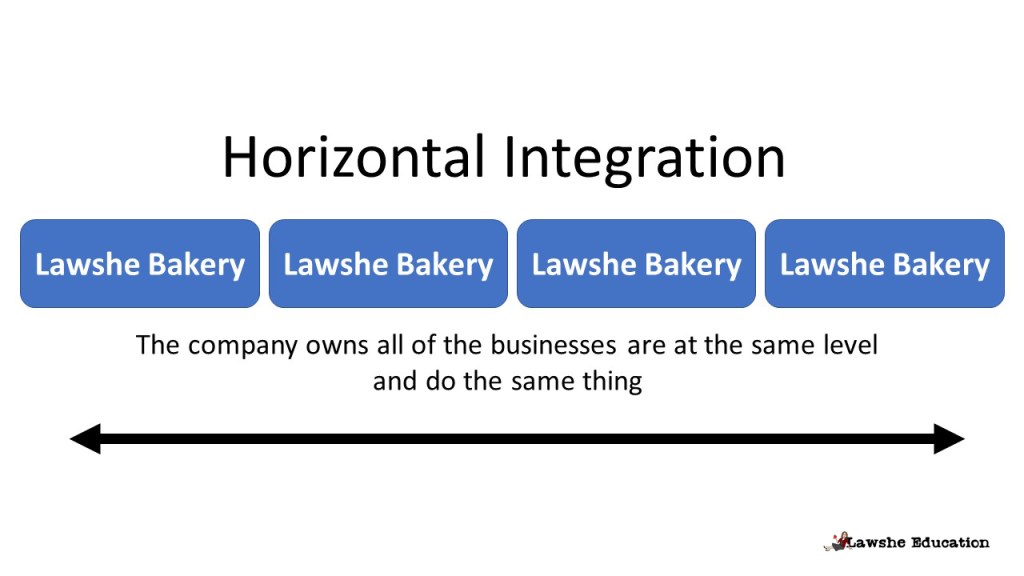
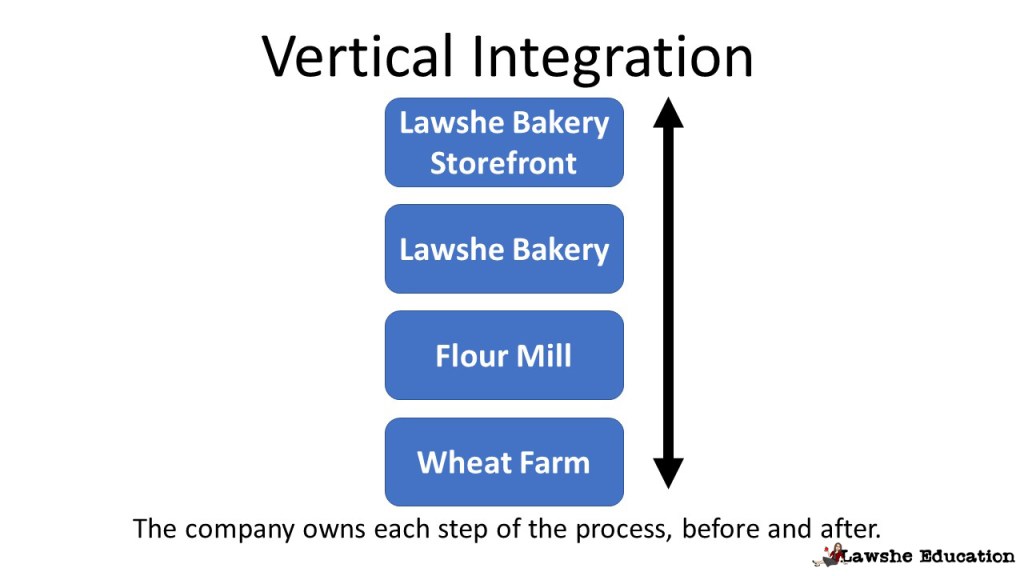
Students traditionally struggle with understanding the differences between verticle and horizontal integration. I draw out on the board examples of what they look like in a bakery format. See the images below. Feel free to download these images to use in your classroom but not for commercial use.

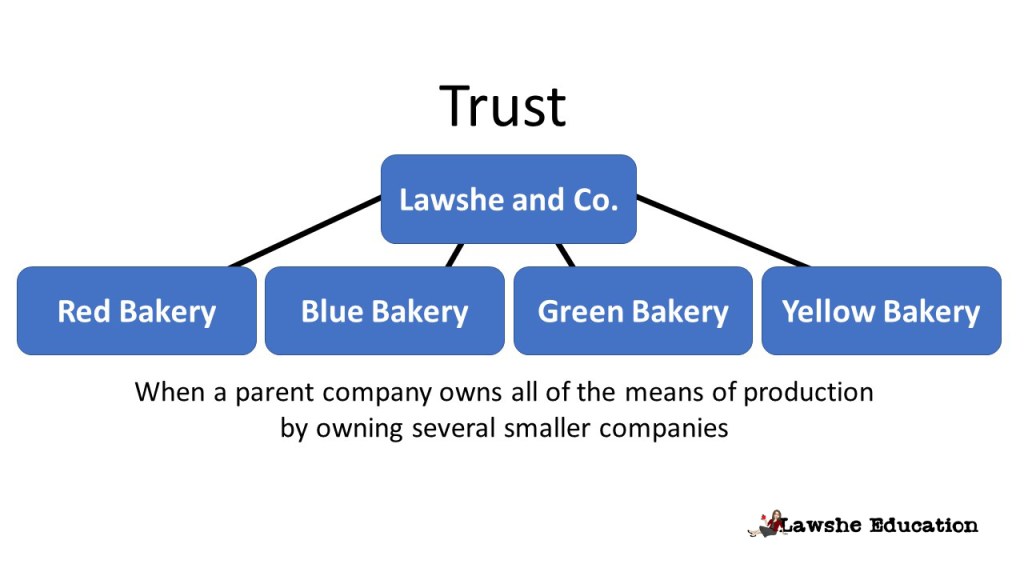
Trusts also tend to be a problem as well. This graphic should helps students to visualze how they are formed.

During the Industrial and Gilded Ages there was a huge influx of immigrants. Cities and local governments were unprepared to handle so many new people at once. Political Machines developed, tenement homes were built, and big business took advantage of the new immigrants.

Political Machines controlled local politics through Political Boses. Students often struggle to understand this concept. If you have time, I highly recommend showing clips of Far and Away as it shows how the Political Machines were run. CLICK HERE to purchase Far and Away. If you have time for the whole movie, that’s even better as it shows immigration, plight of the Irish, Political Machines, housing conditions, and even Westward Expansion. This movie is cram packed with U.S. History topics and students generally tend to enjoy it.

When you get to Tenement Homes be sure to show images taken by Jacob Riis. In general, just show any image from Jacob Riis during this era to help students visualize the working and living conditions of those in the cities. I always make a point to show the Jacob Riss image with the dead horse in the street and the children playing next to it. This image always evokes great classroom discussions about what was acceptable back then and what is acceptable today.

Make sure you cover all of the key players in terms of Captains of Industry and Robber Barons including Andrew Carnegie, Cornelious Vanderbilt, John D. Rockefeller, and J.P. Morgan. Explain how these men often used ruthless business tactics to build monopolies and later trusts. Some also practiced Philanthropy like Carnegie who wrote the Gospel of Wealth and built libraries all across the country.

Don’t forget to cover push and pull factors for why immigrants would want to come to the United States and leave everything they know behind. I list out the different factors like war, famine, political unrest, religious freedom, plenty of food, etc. However, I also take the time to explain that push factors are going to be negative things that are going to push people out of their countries. While pull factors are going to be positive things that are going to pull people away from their home countries and make them willing to take the risk to leave everything they know behind. This is also a good spot to explain the immigration centers located on Ellis, Angel, and Galveston Island. Be sure to mention the processes to be admitted through each and how Angel Island was much slower at processing immigrants especially those from Asia.

When the immigrants arrived many of them moved into ethnic neighborhoods and into tenement homes. Take some time to explain what ethnic neighborhoods are and try to give some examples. I live in Houston, and we certainly still have ethnic neighborhoods. When I ask students if they’ve ever been to China Town or Little Israel, many know exactly what I’m talking about. So use those modern-day examples if you’re in a big city to help students understand what ethnic neighborhoods are. This is a good place to note that the increase of immigrants in combination with unemployed farm laborers (because of advancements in farming technology required fewer farm hands) the cities grew at a rapid pace and increased urbanization. Explain the difference between rural and urban, you would be surprised how many students don’t know the difference.

Immigrants were abused by political machines and by big business. Many would work in sweatshop factories or in mines. They worked for long hours for little pay in dangerous conditions. Work injuries were common and there was no worker’s compensation like we have today. I explain to students what OSHA is and how it works to ensure that we have safe working enviornments today and that Worker’s Compensation will help cover wages if you’re injured. I remind students that these organizations were not around in the Industrial and Gilded Ages to protect workers.

Explain to the students the working conditions, pay, hours, etc. to the students. Since we have protections today that prevent these abuses, many struggle to understand truly how bad the factories and mines were. Show as many pictures as you can to them. Talk to them about children working, show them pictures of children working and standing on the machines. Explain that Child Labor would not be abolished untl WWII….

Since workers were being abused many joined labor unions. Students generally understand the concept that working together they have a larger voice to ask for improvements in working conditions and pay as a group than as a single individual. They struggle more with learning the individual strikes and organizations. Depending on how much your state requires them to know about this topic, you may want to spend a few extra minutes with the strikes and organizations.

As more and more immigrants arrived Nativism continued to grow. It is important for students to see the connection between Nativism and laws like the Chinese Exclusion Act. Both the Chinese and Irish were descriminated against and many companies often refused to hire them. As a result many Chinese and Irish would take the lowest paid and most labor intensive jobs, like building the Transcontinental Railroad. Students generally understand why the Chinese were discriminated against but struggle to understand why the Irish were. The Irish were mostly Catholic and the majority of Americans at the time were Protestant. Within the Protestant community there had been a long and deep rooted distrust of Catholics dating all the way back to the Wars of Religion and the Protestant Reformation. Long story short without going super in-depth into European History, Protestants were persecuted by Catholics and the Pope had a lot of influence over European monarchs. Protestants in the U.S. were concerned that the Pope might gain influence over their political system if more Catholics arrived. Hopefully that helps your students understand why the Irish became a target as well.

Since I usually have around 11 days to cover this material I have more time to do a variety of activities. Of Course, I do my favorite activity, the Industrial and Gilded Ages Picture Cards to review the unit and help with comprehension of vocabulary terms is what I call “Picture Cards.” This activity has been the biggest game-changer for my class. This resource helps everyone from many different levels including Sped and ELL. I created slides that I print out several to a page with groupings of pictures to represent the vocabulary terms for the unit. Then I created a worksheet with a word bank for students to reference. Each set of pictures represents a vocabulary term. Students must look at the context clues from within the images to determine which vocabulary term each set represents. Students absolutely love this activity and are excited when they see the cards on the desk, year after year this has not changed. I let the students discuss what they see with each other and what term they think each set represents. I want to hear what other people see and think, but I don’t just let them copy answers from each other. You can make this on your own, it does take some time. If you want to purchase my Industrial and Gilded Ages Picture Card set ready-made to go, Click Here to purchase.

This time period has so many different political cartoons that it makes it an awesome opportunity to introduce political cartoon analysis. I’ve tried a few different acronyms and methods. With my AP kids I used HIPP, Historical Context, Intended Audience, Purpose, and Point of View. These are great. However, I find that my on-level or regular academic along with my Sped and ELL tend to struggle with this one. I created my own called SLIDE, Symbols, Lables, Infer, Describe, and Era. For symbols I ask the students to look for anything within the political cartoon that represents something else like images of Uncle Sam or bottles on a table representing New Deal Remedies. Labels would be any writing including titles, initials, quotes, etc. I always ask students to infer last, but this is to determine what the political cartoon is trying to tell you. For describe I ask students to just tell me what they visually see, not what they think the political cartoon is saying but what they believe is occuring within the cartoon. Era is important, you would be surprised how often this is overlooked. I have noticed on our state EOC that the political cartoons always have answer choices from different eras, so if they can figure out the era they have an excellent chance of getting the answer correct. In general, placing the cartoon within an era is just good practice. When completing all of these steps to analyze political cartoons, students take the time to look at every little detail and will usually have a greater understanding of what the purpose or message of the political cartoon is. You can of course make your own, but if you’re interested in my Industrial and Gilded Age Political Cartoon Analysis CLICK HERE.

I also do a Fact or Fiction Activity. For this I cut red and green card stock into cards, you can purchase colored index cards that have red and green. I give each student a pair of each. I then put a PowerPoint up on the screen with a statement. I read the statement aloud and I ask the students if the statement is a fact or if it’s fiction. They hold up the green card for fact and red for fiction, this helps to quickly glance around the room to see who understands the concept correctly. Once I click on the slide a second time, a statement appears saying if it’s a fact or if it’s fiction. If it’s fiction, the statement is corrected with the parts changed to make it correct colored green so students can see where they made mistakes. This is a fun and easy class activity to review at the end of the unit. I have an Industrial and Gilded Age Fact or Fiction Review for purchase by CLICKING HERE. You can of course make your own as well.

If I don’t use the Gallery Walk/PowerPoint as a Gallery Walk, I do a Vocab Walk activity for this period. With this activity I created slides I could print out and hang up around the room. On the top is a definition and the bottom is a term. Students can pick any slide and start there. They read the term and then look for the hanging slide with the correct definition. When they find that card, they write down the next term on their worksheet. They repeat this process until the last definition takes them back to the first term they started with. Students can start at any point in the room, making it easy to space out and have students not all in the same place at once. This is a great activity to get students up and moving as well as talking to each other about the definitions for different terms. You can make your own, but if you want to save time I have an Industrial and Gilded Age Vocab Walk available for purchase by CLICKING HERE.

Depending on if time allows, I also have an Industrial and Gilded Age Jeopardy Game that I made in PowerPoint. Every time I’ve played this game the students have been engaged and have fun reviewing. If you’re interested in purchasing this resource, CLICK HERE.

Another great activity that I have is a Graphic Organizer that I made. On the front there are categories for students with boxes. On the back is a list of terms and phrases. Students are to place each of the terms and phrases in the box they are associated with. This is a great activity for students to make associations. I also have it for FREE in my Teachers Pay Teachers Store, CLICK HERE to access it. If you download and use this free resource please remember to leave a review.

Did you find any of these tips helpful? If so, subscribe to my email list. You will have access to tips, lessons, new resource announcements, and of course FREEBIES! I promise to respect your time and your inbox. CLICK HERE to SUBSCRIBE and join the Lawshe Education Community
Westward Expansion in U.S. History Since 1877

Lessons, Tips, and Resources for Westward Expansion in United States History Since 1877

This is another tricky one to teach. Many teachers question how much of Westward Expansion should they need to cover when much of it happens before 1877. Yes, it also happens after 1877, but a lot of the big things like the Homestead Act happen before 1877. So with U.S. History Since 1877 it’s important to remember that this unit is also just an overview but an important one to set up the effects of Westward Expansion in terms of the Granger Movement, Native Americans, and the growth of cities. In U.S. History to 1877 we certainly spend a great deal more time on this particular subject. I only spend a few days on this unit.

I introduce the Westward Expansion Unit with a Gallery Walk/Powerpoint. If you’re interested in purchasing it, Click Here.

For this unit, we talk about what Manifest Destiny is and what impact it would have on both settlers and Native Americans. The Louisiana Purchase is also important to remind students about from the Pre 1877 class. Since the Louisiana Purchas doubled the size of the U.S. and the federal government needed a figure out a way to maintain its claim. I often talk to my students about possession being 9/10 of the law. I explain that if they can’t prove it’s not yours and it’s in your possession, then it’s yours. This same concept can be applied to land. If you have your citizens living on the land in a particular region, it’s easier for you to claim that land as yours.

The Indian Wars are also key events to discuss. In particular, the Battle of Little Big Horn with the Sioux. Their victory of Custer’s 7th Calvary and eventual relocation to reservations play a significant role in Native American history. This is especially true when discussing the Massacre at Wounded Knee at the Sioux Reservation. The Massacre at Wounded Knee Monument in remembrance of the Native Americans who lost their lives will play a role later on in the American Indian Movement in the Civil Rights Movements unit. This is a good spot to talk about the Decimation of the Buffalo and how the dwindling herds affected the lives of Native Americans, forcing them onto reservations. Be sure to teach about the Reservation system and how it affected Native Americans. The Dawes Act is important to discuss. Don’t forget to mention the Indian Schools and the forced assimilation of Native Americans. It’s also worth mentioning the Indian Citizenship Act of 1924 within this unit.

Pre 1877 U.S. History goes a great deal into the wagon trails including the Oregon Trail, but in Post 1877 there is only a brief mention of this movement. Mostly just a reminder that it happened. The Homestead Act of 1862 is important to remind students about as it played a major role in the relocation of Native Americans as well as a motive for settlers to move west.

Railroads are also a major topic within this unit. The Transcontinental Railroad is the most important to mention, it was completed at Promontory Point, UT in 1869. It’s important to mention that both the Irish and Chinese were the laborers who built this railroad because it was hard dangerous labor for low pay that others were not willing to do. The Irish and Chinese were both discriminated against for jobs, the Chinese on the West Coast and the Irish in the industrial centers on the East Coast. The Bessemer Process also made it easier to build the railroads as steel became faster to produce and became cheaper and stronger at the same time. I also mention the Chinese Exclusion Act here, I bring it up again during the Industrial and Gilded Ages.

This is where you can introduce the cattle industry. Cattle Drives began in Texas and worked their way north to railroads where the cattle would be shipped to meatpacking centers in the North. You might want to talk about the effects of the Cattle Drives on ranches and farms, and why they would want to put barbed wire up to stop cattle from crossing their land and using up their resources. This is also a good spot to transfer the lesson to farming and how the steel plow here and how it affected farmers’ productivity.

The Steel Plow transformed the lives of farmers making it easier and faster to plant crops which in turn caused an overproduction of crops. You will want to talk about supply and demand and how that would affect the price of crops when there were too many on the market. Don’t forget to mention all of the loans the farmers took out to purchase the new expensive farming equipment to keep up with their neighbors, contributing to the overproduction. Then remind them that since the farmers were not earning what they needed to pay for the loans, many started to lose the farms they had received for free with the Homestead Act.

Now you can head into the topic of the Grangers, the farmers who began as a social group and turned into a political group. Explain to students that the Grangers will come up again in the Progressive Era where they play a major role with the Populist or People’s Party.

The Gold Rushes to California and the Klondike are also only briefly mentioned. While the California Gold Rushes largely happened before 1877, the Klondike did occur post-1877. The key takeaway from these is that the possibility to strike it rich lured more settlers west, helping to contribute to Westward Expansion and fulfilling Manifest Destiny.

Since this is a short unit there are not many activities I do. I always do the Picture Cards. One of my favorite activities to review the unit and help with comprehension of vocabulary terms is what I call “Picture Cards.” This activity has been the biggest game-changer for my class. This resource helps everyone from many different levels including Sped and ELL. I created slides that I print out several to a page with groupings of pictures to represent the vocabulary terms for the unit. Then I created a worksheet with a word bank for students to reference. Each set of pictures represents a vocabulary term. Students must look at the context clues from within the images to determine which vocabulary term each set represents. Students absolutely love this activity and are excited when they see the cards on the desk, year after year this has not changed. I let the students discuss what they see with each other and what term they think each set represents. I want to hear what other people see and think, but I don’t just let them copy answers from each other. You can make this on your own, it does take some time. If you want to purchase my Westward Expansion Picture Card set ready-made to go, Click Here.

I also do a Fact or Fiction Activity. For this I cut red and green card stock into cards, you can purchase colored index cards that have red and green. I give each student a pair of each. I then put a PowerPoint up on the screen with a statement. I read the statement aloud and I ask the students if the statement is a fact or if it’s fiction. They hold up the green card for fact and red for fiction, this helps to quickly glance around the room to see who understands the concept correctly. Once I click on the slide a second time, a statement appears saying if it’s a fact or if it’s fiction. If it’s fiction, the statement is corrected with the parts changed to make it correct colored green so students can see where they made mistakes. This is a fun and easy class activity to review at the end of the unit. I have a Westward Expansion Fact or Fiction Set ready to go here for purchase, Click Here. You can of course make your own as well.

Depending on if time allows, I also have a Westward Expansion Jeopardy Game that I made in PowerPoint. Every time I’ve played this game the students have been engaged and have fun reviewing. If you’re interested in purchasing this resource, CLICK HERE.

This is a relatively quick unit much like the Early America unit is. I usually teach these two back to back and test them together. Combined I spend about 7 days between these units. Remember that these units are mostly review units to set up the remainder of U.S. History Since 1877.

Did you find any of these tips helpful? If so, subscribe to my email list. You will have access to tips, lessons, new resource announcements, and of course FREEBIES! I promise to respect your time and your inbox. CLICK HERE to SUBSCRIBE and join the Lawshe Education Community
Early America in U.S. History Since 1877

Lessons, Tips, and Resources for Early America in United States History Since 1877.

Many teachers struggle with how much they should review from U.S. History prior to 1877 in a post-1877 class. There are no clear answers and this is definitely something that is on a school by school basis, especially with the different standards held by different states. However, I want to help in any way that I can. So here is what I cover in U.S. History Since 1877 in my Early America unit, or Unit 1.

I use the Gallery Walk/PowerPoint that I created for early America to introduce the unit. Click Here to purchase this resource if you’re interested.

I briefly cover the various countries that sought to colonize North America along with the French and Indian War. We spend some time talking about the American Revolution but we do not go as in-depth as we would for a class that is Pre-Columbian to 1877 for U.S. History. We cover the first few paragraphs of the Declaration of Independence. This is a great resource to get students used to historical documents. We read the first three paragraphs of the Declaration of Independence. I helped the students to break down what it is saying line by line and then summarize the paragraph. I do this individually for the first three paragraphs. It might seem tedious but students are not used to the language used in the Declaration of Independence and explaining line by line what it is saying really helps them to understand what it is saying to them.

We cover a few people in this period, not many. George Washington, Thomas Jefferson, and Alexis de Tocqueville are the main ones. Others get honorable mention like John Hancock.

The U.S. Constitution is important to cover. I explain why the Articles of Confederation failed to provide what was needed for the federal government to function and other reasons why it needed to be replaced. We then spend some time talking about what the U.S. Constitution is and go over the preamble. Again, this is an excellent opportunity to help students break down primary sources when the language isn’t something their familiar with.

Of course, the Bill of Rights is super important. I explain why they were added to the U.S. Constitution. Then we go over each of the amendments individually. I provide examples of how each amendment has been used that affects their lives today. Some teachers do the song and hand gestures, but to be honest I can’t remember them all. I use some other activities that help to reinforce the Bill of Rights. One of my favorites is the Bill of Rights Mystery Texts. If you’re interested, they can be purchased from my store by Clicking Here. With this activity, students read fake text messages with different scenarios. Each set of messages has a violation of the Bill of Rights. Students must identify which amendment is being violated in the messages and sort them. Some amendments have multiple scenarios like the 6th Amendment which covers many things like juries, lawyers, etc. Students really enjoy this activity because it’s in a fun and engaging format, something we all struggle with our lessons. I also provide them with a quick reference sheet that they can keep in their folders if interested Click Here. In addition, I have posters of all 27 amendments on my wall. I purchased a set off Amazon, linked here. However, I do believe that they are too small so I made my own set that is larger. If you’re interested in the larger easier-to-read from a distance set that I created Click Here to purchase. I also take the time to explain the three different branches and their roles as well as checks and balances.

With Alexis de Tocqueville we cover the five concepts of why he believed democracy worked in America including egalitarianism, individualism, populism, liberty, and laissez-faire. Students often struggle with these concepts so it’s important to provide examples of these in their lives today. For example, with individualism, they have the right to determine what to do with their lives. Should they go to college? What careers will they pursue? Etc.

The Civil War is covered very briefly, with the main focus on reconstruction. In particular, the Reconstruction Amendments as they come into play with future Civil Rights Movements.

Finally, we talk about the two mottos for the U.S. E Pluribus Unum and In God We Trust. I explain that E Pluribus means out of many comes one in Latin for the 13 colonies coming together to make one. For In God We Trust, I explain that it was around for a while before it became the official motto of the U.S. to separate the U.S. from communist countries that were atheists in the 1950s.

One of my favorite activities to review the unit and help with comprehension of vocabulary terms is what I call “Picture Cards.” This activity has been the biggest game-changer for my class. This resource helps everyone from many different levels including Sped and ELL. I created slides that I print out several to a page with groupings of pictures to represent the vocabulary terms for the unit. Then I created a worksheet with a word bank for students to reference. Each set of pictures represents a vocabulary term. Students must look at the context clues from within the images to determine which vocabulary term each set represents. Students absolutely love this activity and are excited when they see the cards on the desk, year after year this has not changed. I let the students discuss what they see with each other and what term they think each set represents. I want to hear what other people see and think, but I don’t just let them copy answers from each other. You can make this on your own, it does take some time. If you want to purchase my Early America Picture Card set ready-made to go, Click Here.

Early America or pre 1877 is a short unit in my class, but definitely important to provide a refresher for students. This is especially true to remind them about how our government is set up including the U.S. Constitution, Bill of Rights, Amendments in general, etc. Remember this is just a quick overview as the focus of the course is after 1877. I hope that this helps you get started for the year in U.S. History Since 1877. Be sure to check back for my post on Westward Expansion.

Did you find any of these tips helpful? If so, subscribe to my email list. You will have access to tips, lessons, new resource announcements, and of course FREEBIES! I promise to respect your time and your inbox. CLICK HERE to SUBSCRIBE and join the Lawshe Education Community